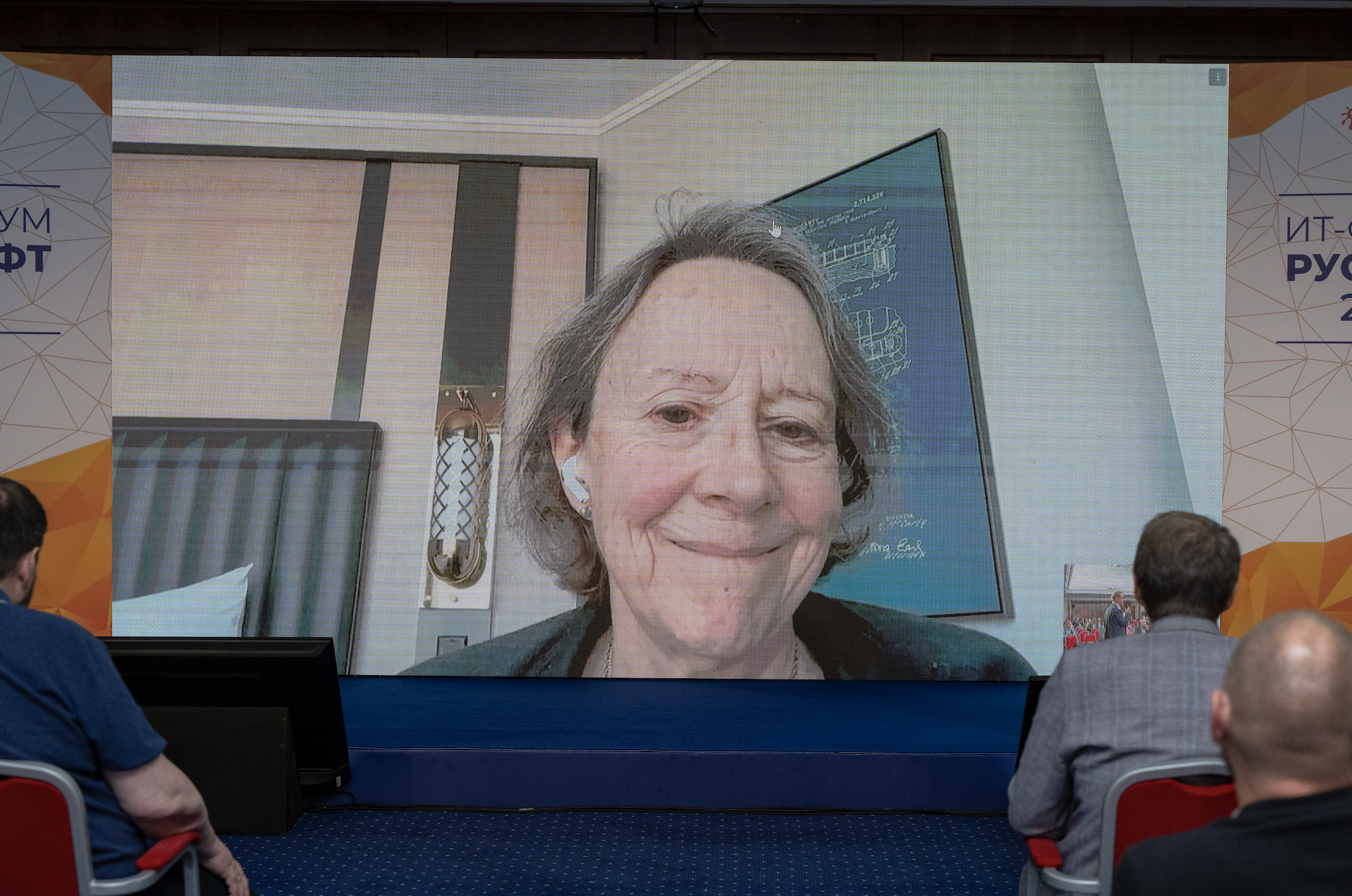
On September 8, Esther Dyson, the founding chair of ICANN (Internet Corporation for Assigned Names and Numbers) and an occasional advisor to US government bodies including NASA, the “godmother” of the Russian IT industry, an early investor in a number of leading Russian IT companies, and a speaker at the first RUSSOFT (at that time, Fort Ross Consortium) Summit in 2001, delivered an online report at the RUSSOFT IT Forum 2025. She devoted her speech to the conclusions from her forthcoming book titled “Term limits: Time and scale in the age of artificial intelligence”. In this presentation, the main focus was on the opportunities and risks presented by the use of artificial intelligence (AI).
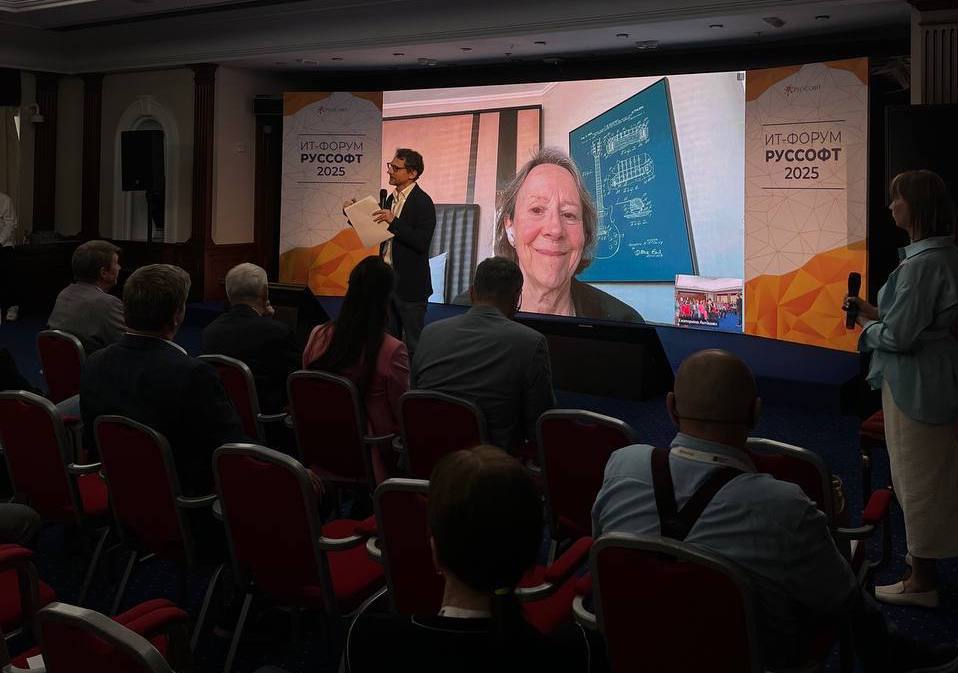
Esther Dyson began by identifying the main tension underlying her new book. She says that we live in an era of dynamic tension between two cultures, namely the human one, based on limited time and resources, and the culture of artificial intelligence, which, on the contrary, is practically endless.
“People are finite. They have a life span, and then they die. This means that our time is priceless. AI can be copied, it can be scaled, it can be produced over and over again. In this sense, it is endless.”
One of the most striking ideas was the concept of “information diabetes” introduced by Esther Dyson. As the speaker noted, harmful information causes damage no less than harmful food. Bad food damages your metabolism, your ability to process food. Bad information ultimately damages your ability to process information: your attention span and your curiosity.
“Information diabetes means bad information. Internet garbage, hallucinations, mistakes made by language models, and most importantly, information intended to manipulate you. There is also money diabetes, which is money earned from useless or harmful work. It destroys our moral instincts.”
Considerable attention was paid to the topic of education. Esther Dyson noticed that under the influence of AI, children begin to learn the way language models do, that is, superficially, according to summaries, without deep understanding.
“Children think they are learning by reading a summary. But they don’t really understand. , People are starting to learn more and more like LLMs. The real challenge is to teach children how to formulate the best queries, rather than just filling their heads with AI-generated answers.”
Reflecting on the possible cultural diversification of AI, Esther Dyson expressed the hope that the world will be able to create not just international, but truly global AI systems based on the best human qualities.
“We want to create an AI that reflects the best in our culture, not the worst. Eastern cultures are more focused on the value of human life and community. Western ones are based on quantitative indicators and markets.”
The topic of artificial intelligence regulation has not been ignored either. She called naïve the idea that all risks can be eliminated with the help of rules. In her opinion, a system of human responsibility is needed.
“The best solution would be to oblige the creators of AI to have liability insurance for the damage it can cause. Then there will be an internal incentive to do everything better. This approach is already working in other areas, such as fire safety. in the field of AI, we need not only regulation, but also constant inspection, risk assessment and the participation of independent third parties, such as insurance companies that can operate more quickly and flexibly than a government.”
During the discussion, one of the participants asked a question about transhumanism and digital immortality and whether it is worth digitizing yourself to prolong your life.
“I don’t want to digitize my consciousness. I don’t want to live forever. I want to live a useful and meaningful life and leave something valuable behind. If you are achieving perfection, you should stop, because any subsequent change will make you less perfect,” said Esther Dyson.
Esther Dyson’s speech became one of the highlights of the forum, and many of her theses sparked a lively discussion. We thank all the participants of the session for their involvement and especially our guest for an honest and deep conversation.
The RUSSOFT Forum is strengthening its international dimension every year. Inviting global experts such as Esther Dyson is another step towards forming a truly global professional platform where we will become a full–fledged partner of the global technological dialogue.